Eastern drought continues getting worse as rains drench the Great Lakes


A dramatic split-screen has developed in recent weeks as relentless rains over the Great Lakes and Midwest stand in stark contrast to the worsening drought over the southeastern states.
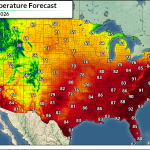
Persistent ridges of high pressure over the southeast have kept conditions hotter and drier than normal since the beginning of March. Many communities have already seen temperatures creep into the 90s, which is more typical of late May than early to mid-April.

The orientation of the jet stream, along with these repetitive ridges, have forced rain and thunderstorms to deflect around the southeast and hammer the Midwest and Great Lakes instead.
Drought is steadily worsening from Texas to New Jersey amid the lack of rainfall. The worst deficits are building in Florida, where places like Tallahassee, Tampa, and Jacksonville have fallen behind by 5-10+ inches since last autumn.

A look at the percent of normal precipitation over the past 30 days does a fantastic job outlining the heat ridges over the southeast and the active storm track that’s extended from Texas to Ontario.
Folks across the Midwest and Great Lakes have had it rough since the start of meteorological spring.

A seemingly endless stream of severe thunderstorms and heavy rainfall have led to destructive tornadoes and damaging hailstorms throughout the region.
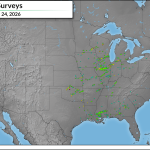
The outline of severe weather reports since March 1 looks more like something you’d expect to see in the middle of summer rather than the middle of spring. We’d usually find the worst thunderstorms around Mississippi and Alabama in April.
Bouts of severe flooding have accompanied the persistent rounds of rain and thunderstorms across the region. We’ve even seen extensive flooding over the border in portions of Ontario as the heavy rainfall combines with rapid snowmelt.
 |
| Graphics courtesy of the CPC |
The Climate Prediction Center‘s monthly outlook for May isn’t terribly optimistic for dramatic improvement for either extreme.
Forecasters expect enhanced odds of generally warmer-than-normal temperatures across the southern tier of the country, with no strong signal for either extreme rainfall or extreme dryness.
Follow me on Facebook | Bluesky | Instagram
Get in touch! Send me an email.
Please consider subscribing to my Patreon. Your support helps me write engaging, hype-free weather coverage—no fretting over ad revenue, no chasing viral clicks. Just the weather.